By the Nutrition for Surgery team · Published 29 September 2026 · Updated 16 October 2026 · 7 minute read
Hospital guidance for patients commonly suggests about 1.2 to 1.5 grams of protein per kilogram of body weight each day around the time of an operation.[1] For an adult who weighs 70 kg, that works out at roughly 85 to 105 grams a day. The exact figure depends on your operation, your size and your health, so your surgical team or dietitian may give you a different target.
The harder part is rarely the number. After surgery you may need more protein while feeling less like eating. The practical answer is to spread protein across small meals and snacks through the day, and to ask for help early if you are struggling to eat.[2]
Key points
- A common guide is 1.2 to 1.5 g of protein per kg of body weight a day, which is about 85 to 105 g for a 70 to 75 kg adult.[1]
- Appetite often falls after surgery, so little and often (about every 2 to 3 hours) with protein first works better than big meals.[2]
- Food comes first. A food supplement shake can add protein when appetite is low, if your team agrees.
- Tell your team if you cannot eat enough or you are losing weight without meaning to.
How much protein do you need after surgery?
UCLH’s patient information, last updated in July 2024, gives a range of 1.2 to 1.5 g of protein per kilogram of body weight per day.[1] Multiply your weight in kilograms by 1.2 and by 1.5 to get a rough range.
| Body weight | Roughly per day (1.2 to 1.5 g/kg) |
|---|---|
| 50 kg | 60 to 75 g |
| 60 kg | 72 to 90 g |
| 70 kg | 84 to 105 g |
| 80 kg | 96 to 120 g |
| 90 kg | 108 to 135 g |
Treat these as a starting point, not a prescription. The same UCLH page says a dietitian may give you targets specific to you.[1] Some health conditions, including kidney disease, can change protein advice, so ask your team before you raise your intake if you have one.
Why protein needs rise after an operation
The Royal National Orthopaedic Hospital’s patient guide, updated in January 2026, says your protein needs rise while you are healing, and that without enough intake the body breaks down muscle, including muscles used for breathing and circulation.[2] The same guide says good nutrition after surgery may reduce complications, support wound healing and help you keep your strength.[2]
UCLH makes a related point about the weeks before surgery: more muscle in reserve going into an operation is linked with a lower risk of complications afterwards.[1] Protein is the raw material for muscle and other tissue, which is why hospitals ask patients to pay attention to it. These are statements from hospitals about food in general, not claims about any product.

Why appetite drops when you need more
It is common to feel less hungry after an operation. The RNOH guide lists nausea, constipation, pain, worry and an unfamiliar setting as reasons, and notes that surgery can slow the gut.[2] None of this means you are doing anything wrong.
It does mean the extra protein often has to arrive in smaller portions. Mention constipation to your nurses or doctors if you have it, because the RNOH guide says it can reduce appetite and make nausea worse, and a change to your medicines may help.[2]
How to get protein into small meals
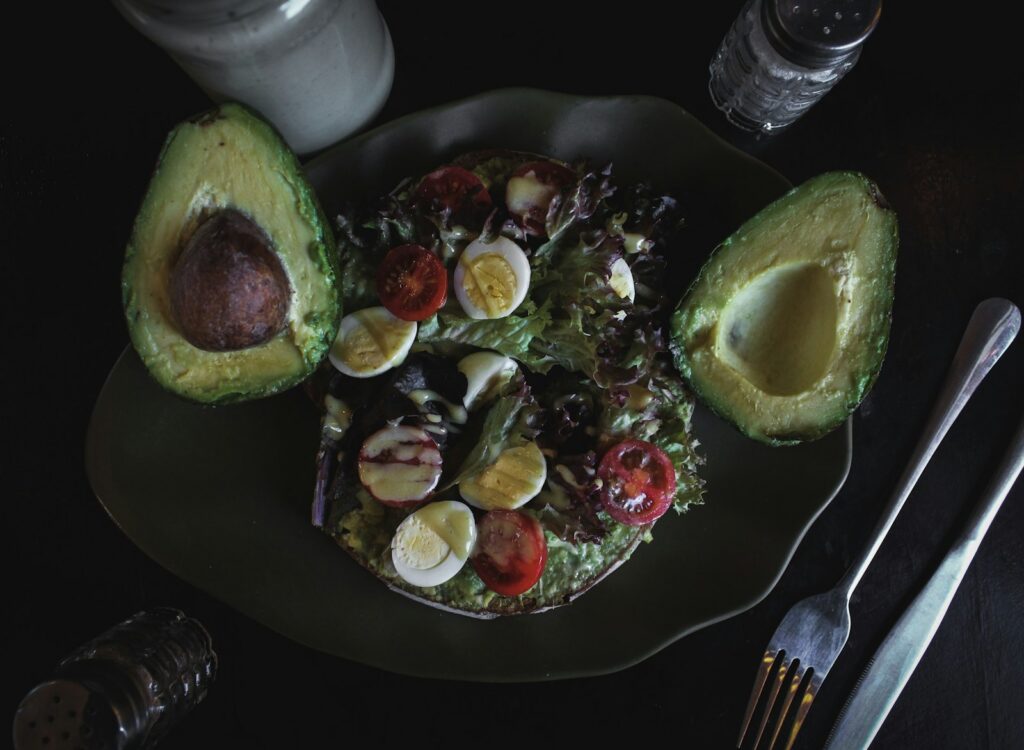
If your daily target is around 90 g and you eat five times a day, that is about 18 g each time. UCLH suggests these portion cues: a palm-sized piece of meat or fish, two eggs, a matchbox-sized piece of cheese, a small pot of yoghurt, or a handful of nuts and seeds.[1]
| Food | Protein per 100 g |
|---|---|
| Chicken breast | 32 g |
| Hard cheese | 25.4 g |
| Tinned tuna | 24.9 g |
UCLH also suggests fortifying milk by stirring in skimmed milk powder, which raises the protein in a pint from about 18 g to about 40 g.[1] If you eat a vegetarian or vegan diet, UCLH advises eating a variety of plant proteins, because some lack certain amino acids.[1]
Small meals, protein first
The RNOH guide gives simple rules that work for most people while appetite is low:[2]
- Eat little and often, about every 2 to 3 hours, with high-energy, high-protein snacks between meals and before bed.
- If you cannot finish a meal, eat the protein foods first.
- Avoid filling up on drinks just before or during meals.
- Add cream, cheese, oil, nut butter or milk powder to everyday foods rather than serving bigger portions, and choose full-fat products.
- Aim for 1.5 to 2 litres of fluid a day, not counting alcohol.
If you are overweight, the same guide says not to try to lose weight straight after surgery. Aim to keep your weight and muscle strength until you have recovered.[2]
Where a protein shake fits
Food should do most of the work. A shake is for the moments when eating enough protein is not realistic, and it should be agreed with your team, especially if a dietitian has already prescribed a nutrition drink. It is a food supplement and not a meal replacement.
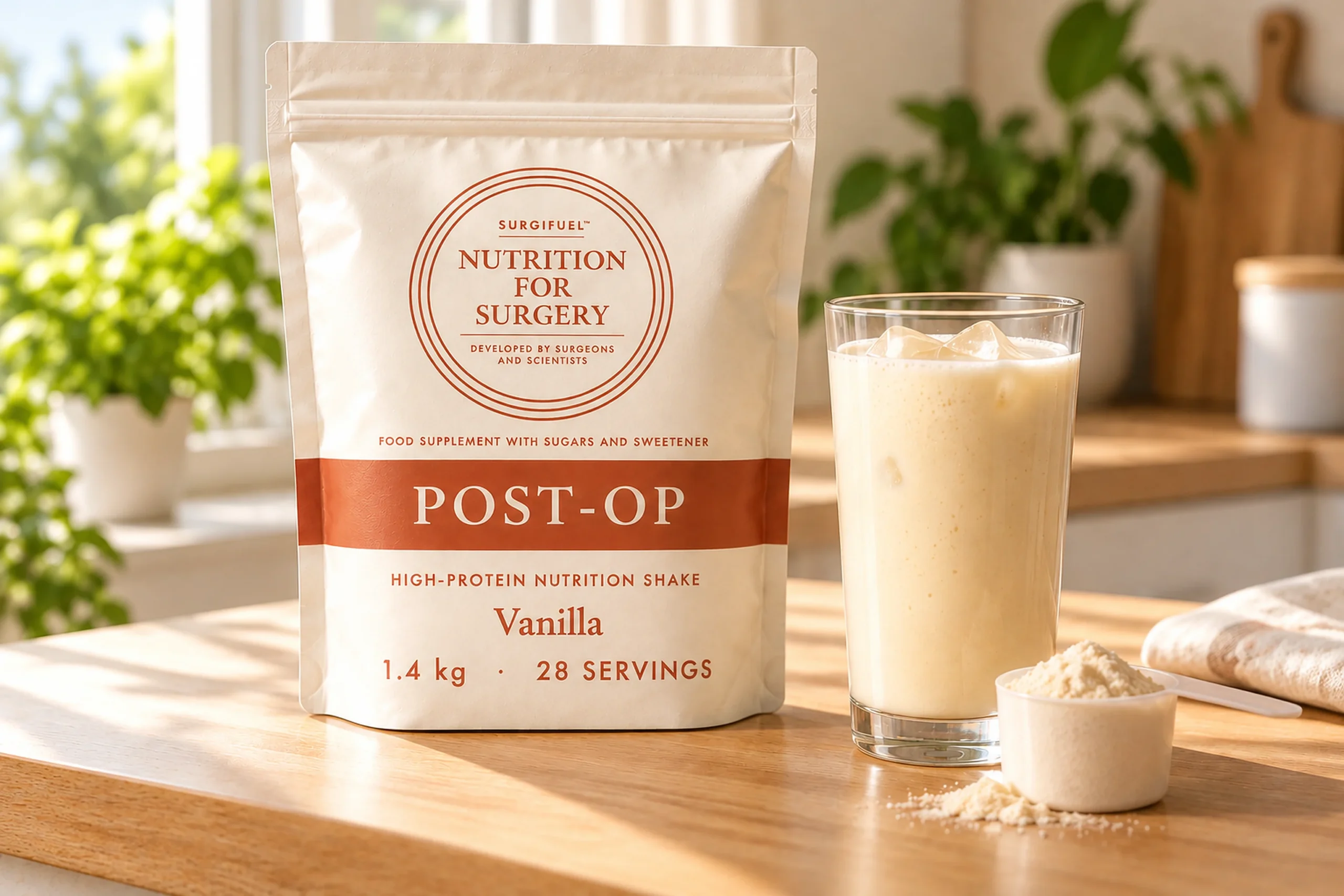
SurgiFuel™ Post-Op is a high protein food supplement made for the two weeks after surgery. You mix 50 g (two scoops) into about 300 ml of water or milk and have it twice a day. A 1.4 kg pack gives 28 servings, which is 14 days. Each serving has 9.6 g of protein and 166 kcal, and the 100 g daily portion has 19 g. That covers only a fraction of the protein a day suggested earlier for a 70 kg adult, which is why food still does most of the work. See the full label figures. Professor Sandip Hindocha, who founded Nutrition for Surgery, has a financial interest in it. Our how to take it page covers mixing and timing, and you can compare both shakes or see where to buy. Check the label and ask your team first if you have allergies.

When to ask for extra help
Tell your team if you are struggling to eat or drink, you are losing weight without meaning to, or nausea and constipation are not settling. The RNOH guide says a nurse can refer you to a dietitian if you are really struggling.[2] NICE’s guideline on nutrition support for adults covers screening for malnutrition and oral nutrition support, so you can ask whether either applies to you.[3] Our checklist of questions to ask your surgical team has a section for exactly this, and the complete guide to nutrition around surgery puts it in context.
International guidelines, including the ESPEN practical guideline on clinical nutrition in surgery, treat nutrition as part of surgical care rather than an optional extra.[4]
Frequently asked questions
How much protein should I eat per day after surgery?
A common guide is 1.2 to 1.5 g per kg of body weight a day, which is about 85 to 105 g for a 70 to 75 kg adult.[1] Your surgical team or dietitian may set a different target for your operation and health.
Is it OK to have a protein shake after surgery?
Many people do, but ask your team first, especially if you have been prescribed a nutrition drink or have a condition that affects protein advice. Food should still do most of the work, and a shake should sit alongside it rather than replace meals.
How long do protein needs stay high after surgery?
There is no single answer. The RNOH guide says you need extra protein while you are still healing.[2] Follow your surgical team’s advice for your operation, and ask when to return to your usual diet.
What if I am vegetarian or vegan?
Eat a variety of plant proteins such as beans, lentils, tofu and soya, because some plant foods lack certain amino acids.[1] A dietitian can help you plan this if your appetite is low.
Should I try to lose weight after surgery?
Not straight away. The RNOH guide advises keeping your weight and muscle strength until you have recovered, rather than dieting.[2]
Sources
- University College London Hospitals NHS Foundation Trust. Increasing protein in your diet (patient information, last updated 17 July 2024). uclh.nhs.uk
- Royal National Orthopaedic Hospital NHS Trust. Eating well before and after surgery: patient guide (updated 29 January 2026). rnoh.nhs.uk
- National Institute for Health and Care Excellence. Nutrition support for adults (CG32). Last reviewed 4 August 2017. nice.org.uk/cg32
- Weimann A, Braga M, Carli F, et al. ESPEN practical guideline: Clinical nutrition in surgery. Clinical Nutrition. 2021;40(7):4745-4761. doi.org/10.1016/j.clnu.2021.03.031
Keep reading
- The complete guide to nutrition around surgery
- Questions to ask your surgical team
- What to eat before surgery
- Frequently asked questions
This article is general information, not medical advice, and it does not replace advice from your surgical team, dietitian or GP. Professor Sandip Hindocha, who founded Nutrition for Surgery, has a financial interest in SurgiFuel™. We cite our sources and review articles about every six months; see our editorial policy. Next planned review: April 2027.