By the Nutrition for Surgery team · Published 30 October 2026 · 6 minute read
After surgery your body needs extra protein to heal, but a small appetite makes big plates unrealistic. The practical answer is little and often: eat something every two to three hours, choose higher-protein foods first, and fortify what you already like.[1]
Below are ideas that work for small appetites, with example protein amounts from a hospital dietitian leaflet.[2]
Key points
- Hospital advice is to eat small amounts every 2 to 3 hours and have protein foods first.[1]
- Fortified milk (half a pint of full-cream milk with 2 tablespoons of milk powder) is an easy booster.[1]
- Eggs, dairy, yoghurts, pulses, nuts, fish and meat all count.[1][2]
- Amounts below are examples from one leaflet, and products vary by brand.[2]
- Your team or dietitian may set a personal protein target, and that overrides general figures.
Start with protein, then the rest
If you only manage a few mouthfuls, make them count. Hospital guidance suggests eating the higher-protein part of a meal first, such as the egg, fish, chicken or beans, before the starch or vegetables.[1]
Snacks matter as much as meals. Think of the day as six small eating moments rather than three large ones, and keep easy options within reach.

Example protein amounts
These figures come from a hospital leaflet on increasing protein. They are examples, not a prescription, and brands differ, so check the label on the product you buy.[2]
| Food or drink | Portion | Protein (approx.) |
|---|---|---|
| Fortified milk | Half a pint | 20 g |
| Skyr yoghurt | 150 g pot | 14 g |
| Plant protein yoghurt | 200 g | 15 g |
| Soya drink (protein type) | 200 ml | 10 g |
| Boiled egg | 1 medium | 7 g |
| Cheddar cheese | 30 g | 8 g |
| Hummus | 2 tablespoons | 5 g |
| Unsalted nuts | 30 g | 5 g |
| Falafel | 3 pieces | 6 g |
| Rice pudding | 200 g | 6 g |
| Custard pot | 150 g | 4 g |
The leaflet does not give a single daily gram target, which is why we suggest asking your team whether you have one. Our article on how much protein you may need after surgery explains the ranges clinicians discuss.[2]
Ideas for breakfast, lunch and evening
Breakfast can be Greek-style or skyr yoghurt with fruit and nuts, scrambled egg on soft toast, or porridge made with fortified milk.[1][2] Lunch might be soup with grated cheese or lentils stirred in, a boiled egg sandwich, or hummus with soft bread.
In the evening, fish with mash, tender chicken, a small omelette or dhal with rice are all easy to chew and rich in protein. Dessert counts too, such as custard or rice pudding.[2]

Making food work harder
Fortifying means adding protein and energy without adding volume. Try the fortified milk recipe in soups, porridge and hot drinks, add skimmed milk powder to mashed potato, or stir grated cheese into omelettes.[1]
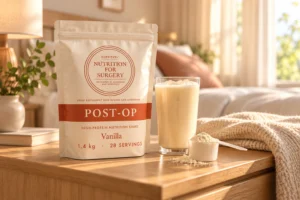
Nourishing drinks are useful when chewing feels like effort. Milky drinks, smoothies made with yoghurt and a nutritional shake can bridge a poor day. The Post-Op SurgiFuel shake is one option, labelled at 9.6 g protein per 50 g serving, and it should sit alongside real food rather than replace it.
Practical help
If packing for a hospital stay, what to pack for hospital covers what wards usually allow. If nothing appeals at all, the no-appetite guide goes through tactics that may help.
Tell your team if you are losing weight, eating much less for several days or struggling to swallow. A dietitian can tailor advice to your operation and any conditions, and it is worth asking for that early.
The short version. Eat little and often, start with the protein on the plate, fortify milk and soups, and check labels because amounts vary. Ask your dietitian if you need a personal target.[1][2]
Frequently asked questions
What are the best high-protein foods after surgery?
Eggs, fish, chicken, dairy, yoghurt, cheese, beans, lentils, tofu and nuts are all commonly suggested. Choose whichever you can eat comfortably.[1]
How can I get more protein with a small appetite?
Eat small portions every two to three hours, have protein first, and fortify milk, soups and porridge. Nourishing drinks can fill gaps on poor days.[1]
How much protein is in an egg?
One medium boiled egg provides about 7 g of protein according to a hospital protein leaflet.[2]
Do I need a protein shake after surgery?
Not always. Food first works for many people, and shakes are a convenient top-up when you cannot eat enough. Ask your team or dietitian what suits you.
Is it safe to eat high-protein foods with kidney problems?
Not necessarily. If you have kidney disease or another condition affecting protein intake, follow your clinician’s advice rather than general guidance.
Sources
- RNOH, Eating well before and after surgery (page updated January 2026).
- University Hospitals Plymouth, A guide to increasing your protein intake (May 2025; review due May 2027).
Keep reading
How much protein after surgery · No appetite after surgery · Questions for your surgical team
This article is general information, not medical advice, and it does not replace advice from your surgical team, dietitian or GP. Professor Sandip Hindocha, who founded Nutrition for Surgery, has a financial interest in SurgiFuel™. We cite our sources and review articles about every six months; see our editorial policy. Next planned review: April 2027.