By the Nutrition for Surgery team · Published 23 October 2026 · 7 minute read
Yes, in most hospitals you can bring some food and drink from home, but there are rules, and they differ from one hospital to the next. In general, sealed, shelf-stable snacks are welcome, while meat, eggs, most dairy and anything that needs a fridge are not.[1] Ask the ward before you pack.
This guide uses one large NHS trust’s published list as an example, adds tips for people with a small appetite, and ends with a simple packing list.
Key points
- Hospitals provide meals, but many allow patients to keep snacks and drinks from home. Rules vary, so check with your ward.[1]
- Sealed, shelf-stable foods such as fruit, nuts, cereal bars and long-life milk drinks are usually fine. Raw meat, eggs and most dairy are not.[1]
- Label containers with your name and the date. Staff may not be able to store or reheat food for you.[1]
- Do not eat your snacks while you are fasting for surgery. Keep them for afterwards.
- Tell the nurses about allergies and special diets. They can arrange meals and sometimes supplements.[2]
Can you bring your own food into hospital?
Most hospitals serve meals and say you do not need to bring food. But they also recognise that a small appetite, a long day or a late theatre slot means a snack by the bed helps.[2] The rules exist to protect everyone on the ward.
Ward staff may note in your records what visitors bring in.[1] That is normal, and a good reason to tell the nurses what you have.
What is usually fine, and what is not
This is Leicester’s Hospitals list, as published in 2024. Your hospital may differ, so treat it as a guide to the kind of rules to expect.
| Usually fine | Usually not allowed |
|---|---|
| Wrapped fresh fruit and fruit you can peel | Raw or cooked meat and poultry, and things like pies and pate |
| Dried fruit, pre-wrapped nuts and seeds | Yoghurt, custard and cream, unless long-life |
| Bottled drinks, small juice cartons, long-life milk drinks | Eggs and egg products, shellfish and sushi |
| Cereal bars, flapjacks, biscuits, plain cakes | Pre-packed sandwiches, cold rice and pasta |
| Crackers, crispbreads, individual spreads, long-life puddings | Takeaways, ice cream, soft or blue cheeses, unpasteurised milk |
Labelling, storage and reheating
The same trust asks patients to use suitable containers, labelled with name and date, and to bring only one meal or item at a time.[1] Food past its best-before date is not accepted, and food cannot be shared with other patients.[1]
Chilled food needs a cool bag with ice packs. A ward fridge may keep it for 24 hours, but space is not guaranteed.[1] Food cannot be cooked or reheated on the ward, and home-prepared food should be eaten on the day it is brought in.[1]
Snacks worth packing if your appetite is small
A small appetite after surgery is common, and having something within reach makes it easier to eat little and often. One NHS leaflet suggests keeping snacks such as fruit, biscuits, chocolate, crisps and jelly by the bed.[2]
Shelf-stable choices also suit the rules above: nuts, dried fruit, cereal bars, crackers, and long-life milk drinks or puddings.[1] Soup in a flask is acceptable in some hospitals, but check with the nurses first.[2]
Keep your snacks for after the fasting window
Before an operation under anaesthetic you will be told to stop eating and drinking for a set time. Do not use your packed snacks during that window. What Does Nil by Mouth Mean Before Surgery? explains how the times work.
Allergies, special diets and supplements
Tell the nurses about any allergy or special diet. One leaflet says nurses can arrange milk-free, egg-free, gluten-free, halal or vegan meals, and can help with supplements and with eating itself.[2]
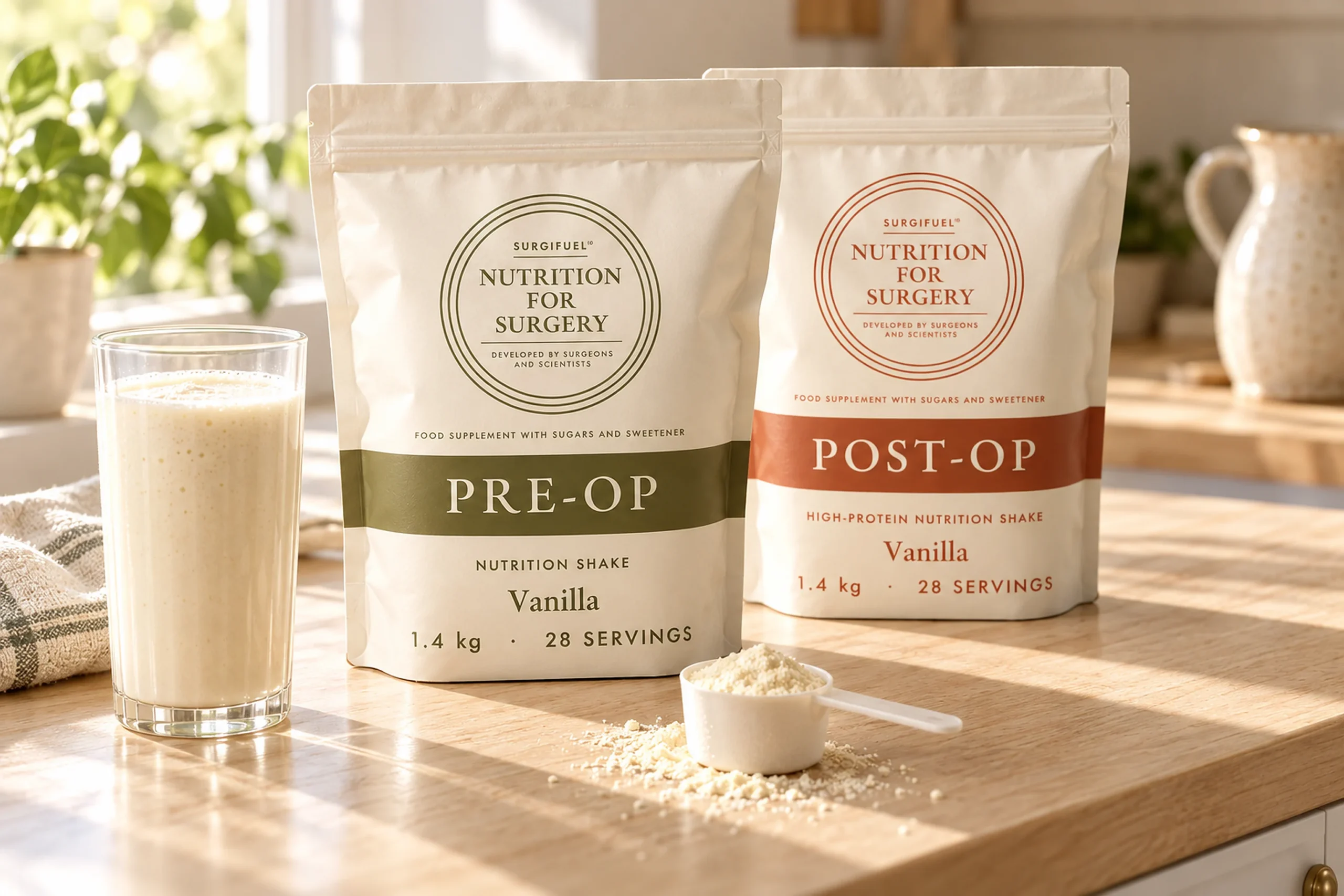
Some wards also offer nutrition drinks and soups without a prescription.[2] If you plan to bring a food supplement such as SurgiFuel Post-Op, which is a high-protein food supplement, ask the ward and your dietitian first. The label lists every ingredient and says it may contain milk, so you can show it to staff. It is a powder you mix with about 300 ml of water or milk, so you would need a way to do that. Policies on open or mixed items vary, and your team has the final say.
If family or friends are bringing food in
The same rules apply to visitors. At the trust we looked at, visitors should bring one meal or item at a time, in a labelled container, and ward staff record it in the nursing notes.[1] Ask your visitors to check with the nurse before they set off, so a home-cooked meal does not end up going back out of the door.
It also helps to tell them what you can and cannot eat on the day, especially if you are fasting or have just had your operation.
Questions to ask the ward
- Which foods and drinks from home are allowed on this ward?
- Is there a fridge, and how long can food be kept?
- Can I have supplements or nutrition drinks, and who arranges them?
- What can my visitors bring, and who should they ask?
A simple packing list
- A refillable water bottle or small bottled drinks
- Long-life milk drinks or puddings
- Nuts, dried fruit and cereal bars
- Crackers, crispbreads or plain biscuits
- A labelled, lidded container and a small cool bag, if the ward allows chilled food
- A note of any allergies and dietary needs, to give the nurses
The short version
Pack sealed, shelf-stable snacks, label everything, ask before bringing anything chilled, and keep snacks for after the fasting window. The printable questions checklist has a section on eating and drinking after the operation and going home.
Frequently asked questions
Can you bring food into hospital for a patient?
In most hospitals, yes, within limits. Sealed, shelf-stable food and drinks are usually fine, while raw meat, eggs and most chilled dairy are not. Rules vary, so ask the ward nurse.[1]
What snacks can you take into hospital?
One large NHS trust allows wrapped fruit, dried fruit, nuts, cereal bars, biscuits, crackers, bottled drinks and long-life milk drinks or puddings. It does not allow meat, eggs, most yoghurt or takeaways.[1]
Can nurses heat up food from home?
Usually not. At the trust we looked at, food cannot be cooked or reheated on the ward, and home-prepared food must be eaten on the day it is brought in. Soup in a flask may be allowed, but ask first.[1][2]
Can you eat your own snacks before surgery?
Not during your fasting window. Follow the times on your letter, and keep the snacks for afterwards.
Who should you ask about special diets in hospital?
Tell the ward nurses. One hospital leaflet says they can arrange milk-free, egg-free, gluten-free, halal and vegan diets and help with supplements.[2]
Sources
- University Hospitals of Leicester NHS Trust, A guide to the types of food you can bring into hospital for patients (Leicester’s Hospitals, produced November 2024, one trust’s example only).
- Dudley Group NHS Foundation Trust, Tips for a small appetite in hospital (patient leaflet originated 2015, last reviewed 2019, so check the current advice with your ward).
Keep reading
How Much Protein Do You Need After Surgery? · The Complete Guide to Nutrition Around Surgery · Questions to Ask Your Surgical Team
This article is general information, not medical advice, and it does not replace advice from your surgical team, dietitian or GP. Professor Sandip Hindocha, who founded Nutrition for Surgery, has a financial interest in SurgiFuel™. We cite our sources and review articles about every six months; see our editorial policy. Next planned review: April 2027.